

- Congress of the People
-
Der Congress of the People (COPE) ist eine sozialliberale südafrikanische Partei, die 2008 von früheren Mitgliedern des regierenden Afrikanischen Nationalkongresses (ANC) gegründet wurde.
Inhaltsverzeichnis
Geschichte
Gründung
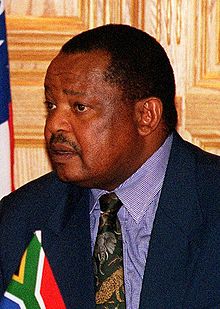 Mosiuoa Lekota
Innerhalb des ANC gab es von 2005 bis 2008 einen Machtkampf zwischen dem Lager des bisherigen Präsidenten Thabo Mbeki und seinem ehemaligen Vizepräsidenten Jacob Zuma. Aufgrund von Korruptionsvorwürfen war Zuma 2005 von Mbeki als Vizepräsident entlassen worden, jedoch setzte sich Zuma im weiteren Verlauf des Machtkampfes Ende 2007 als neuer Parteivorsitzender durch. Im Herbst 2008 folgte Mbekis Sturz als Präsident Südafrikas durch die neue ANC-Führung. Da Jacob Zuma das dazu notwendige Parlamentsmandat fehlte, wurde Kgalema Motlanthe neuer Präsident.
Schon bei der Wahl Zumas zum Parteivorsitzenden waren Spannungen innerhalb des ANC zum Vorschein getreten, die sich mit der Ablösung Mbekis als Präsident noch verstärkten. Während Mbeki eine liberale Wirtschaftspolitik verfolgte und eher distanziert auftritt, ist Zuma dem linken Flügel zuzurechnen und sehr populär[1]. Außerdem trugen ethnische Spannungen zwischen Zulu und Xhosa, verkörpert durch Jacob Zuma und Thabo Mbeki, zu dem Konflikt bei[2]. In der Folge trat eine Gruppe von bisherigen ANC-Mitgliedern um Mosiuoa Lekota aus der Partei aus und begann die Gründung einer neuen Partei voranzutreiben.
Auf der Gründungsversammlung in Bloemfontein Mitte Dezember 2008 wählten die etwa 4000 Delegierten Mosiuoa Lekota zum Parteivorsitzenden. Stellvertretende Parteivorsitzende wurden Mbhazima Shilowa und Lynda Odendaal. Damit wurde die bisherige kommissarische Führung mit Lekota und Shilowa bestätigt.[3] Die offizielle Registrierung als Partei und Anerkennung als solche durch die Independent Electoral Commission (IEC) erfolgte am 19. Dezember 2008.[4]
Parlamentswahlen 2009
Die Partei trat 2009 zum ersten Mal zu einer Parlamentswahl an. Am 24. Januar verabschiedete COPE ihr Wahlprogramm[5], das die Forderung enthält, den Staatspräsident sowie die Ministerpräsidenten und Bürgermeister direkt zu wählen. Außerdem stehen Kriminalitätsbekämpfung und Hilfe für die Armen im Vordergrund des Programms.[6] Präsidentschaftskandidat war Mvume Dandala.[7] Bei den Wahlen am 22. April 2009 erreichte COPE 7,42 Prozent der abgegebenen Stimmen und verfehlte das gesetzte Ziel. Nach dem ANC und der DA wurde COPE die drittstärkste Kraft im Parlament.[8] Ihr Fraktionsvorsitzender wurde Mvume Dandala.
Führungskampf
Im Jahr 2010 entwickelte sich ein Machtkampf um die Führung der Partei zwischen Lekota und Shilowa. Am 29. Mai 2010 sprachen die Delegierten eines Parteitages sich in einem Misstrauensvotum gegen Lekota als Vorsitzenden aus. Eine Woche später erklärte der Oberste Gerichtshof in Johannesburg dieses Votum aufgrund von Verfahrensfehlern für nichtig.[9] Aus Protest gegen den Machtkampf trat Mvume Dandala mit Wirkung vom 15. Juli 2010 vom Fraktionsvorsitz und als Parlamentsmitglied zurück.[10] Das Präsidium (congress national committee) der Partei entschied, dass Lekota sowohl Parlamentssitz als auch den Fraktionsvorsitz übernehmen soll. Gegen diese Entscheidung ging Shilowa gerichtlich vor, verlor den Rechtsstreit jedoch.[11]
Rechtsstreit um den Namen
Die neue Partei plante zunächst den Namen South African National Congress anzunehmen. Aufgrund des Widerstands des ANC wurde dieser Plan jedoch aufgegeben. Der ANC versuchte der neuen Partei anschließend ebenfalls die Verwendung des Namens Congress of the People gerichtlich untersagen zu lassen. Es wurde argumentiert, dass der Name auf den historischen Congress of the people im Jahre 1955 und die dort verfasste Freiheitscharta anspiele. Diese sei jedoch ein Teil der Geschichte des ANC, und keine andere Partei könne dieses historische Ereignis für sich in Anspruch nehmen.[12][13] Der gerichtliche Einspruch wurde mittlerweile zurückgezogen.[14]
Weblinks
- Webpräsenz (englisch)
Einzelnachweise
- ↑ Why Mbeki had to go BBC News: Online-Artikel vom 21. September 2008
- ↑ How ANC came to split BBC News: Online-Artikel vom 16. Dezember 2008
- ↑ Lekota likely to lead Cope to the polls. Mail and Guardian: Online-Artikel am 15. Dezember 2008
- ↑ Cope officially registered as a political party. Mail and Guardian: Online-Artikel am 19. Dezember 2008
- ↑ A new Agenda for Change and Hope for All, Wahlprogramm von COPE zur Parlamentswahl 2009
- ↑ New SA party promises reforms, Online-Artikel der BBC News vom 24. Januar 2009
- ↑ Dandala: There's no leadership struggle in Cope, Online-Artikel des Mail & Guardian vom 5. März 2009
- ↑ ANC rules National Assembly, but misses two-thirds, Online-Artikel des Mail & Guardian vom 25. April 2009.
- ↑ Court says Lekota still Cope president, Mail & Guardian, 6. Juni 2010.
- ↑ Dandala rues Cope's 'tawdry' leadership battle, Mail & Guardian, 15. Juli 2010.
- ↑ Cope's Lekota heads back to Parliament, Mail & Guardian, 18. August 2010.
- ↑ What's in a name?: Cope confident at court ruling. Mail and Guardian: Online-Artikel am 10. Dezember 2008
- ↑ ANC to block Congress of the People. In the News.co.za-Artikel am 11. November 2008
- ↑ ANC turns attention to Western Cape. Mail and Guardian: Online-Artikel am 18. Dezember 2008.
Kategorien:- Partei in Südafrika
- Liberale Partei
- Sozialdemokratische Partei

Wikimedia Foundation.
